Feedback board
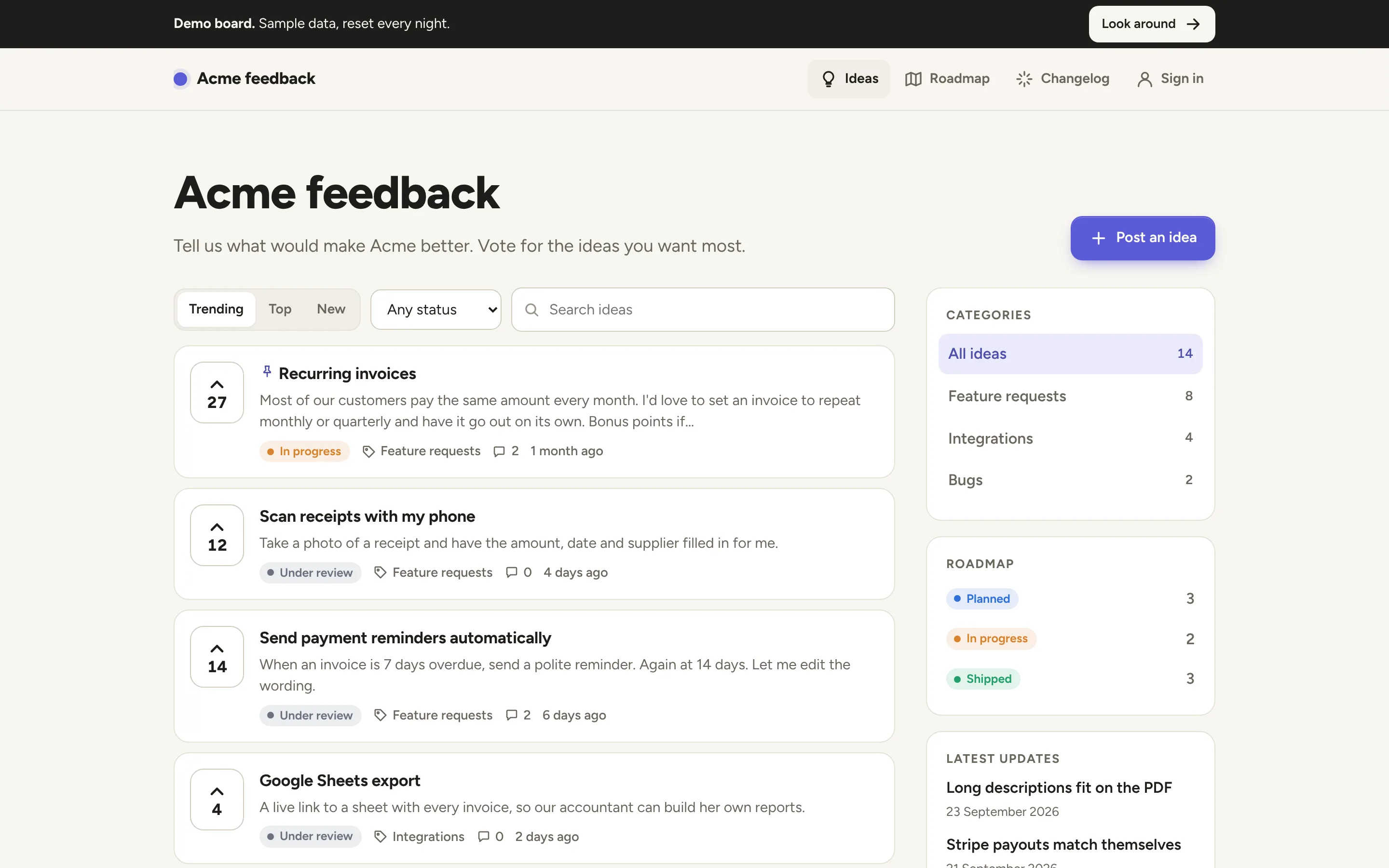
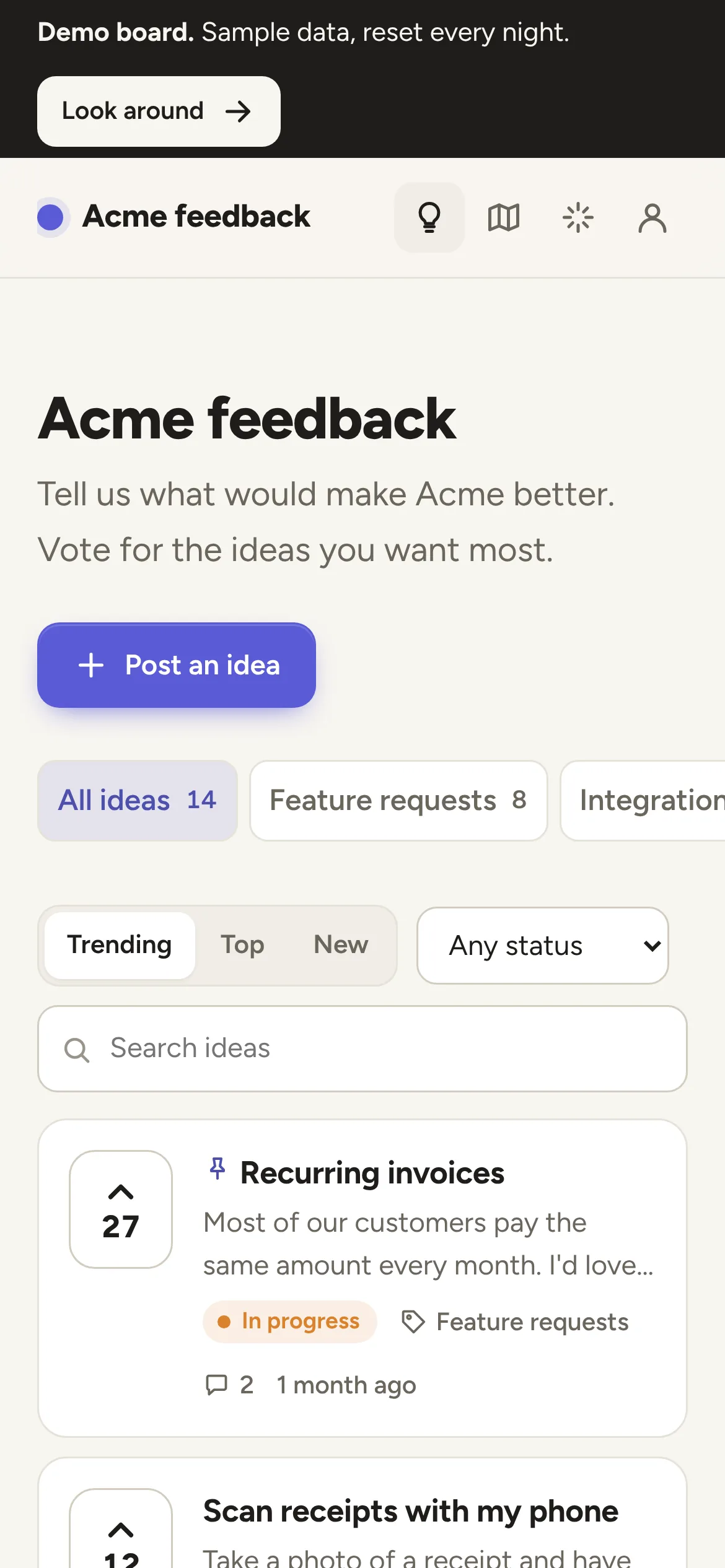
Customers post ideas and vote, you share a roadmap and tell them when it ships.
Instead of Canny, Featurebase and Frill
Give it to your assistant
Copy it
Read https://whisk.run/skill. Then clone https://github.com/Whisk-Hosting/feedback-board, deploy it to Whisk as a new app, and give me its address.
Make it yours
Read https://whisk.run/skill. Build us a feedback board on Whisk, starting from https://github.com/Whisk-Hosting/feedback-board. Change it to suit our business: [what your product is], [who your customers are], [your colours]. Deploy it and give me its address.
What it does
- A board where customers post ideas and vote for the ones they want
- Similar ideas shown while someone types, so votes aren't split
- Trending, top and new, with categories and search
- Statuses your team sets: under review, planned, in progress, shipped
- A public roadmap built from those statuses
- A changelog, with an email to everyone who asked when their idea ships
- Comments, and staff notes customers don't see
- Pin, merge and tidy ideas
- An API, so your own systems can post ideas, change their status and publish changelog entries
How it is built
TypeScript on Node with Hono, Postgres and plain SQL migrations. Pages are drawn on the server, with a little browser script for voting and search.
The decisions are pure functions over immutable data, and the routes are thin shells that load rows, decide and store. People's details and votes are protected by row-level security in the database, so a query can never hand one customer another's email.
Whisk provides the rest: customer sign-in for voters, team sign-in for staff, the database and the email that tells people their idea shipped.
Make it yours
- Your product's name, logo and colour
- Your own domain, such as feedback.yourbusiness.com
- Your categories and statuses
- Who can post and vote
- What the shipped email says
Whisk features it uses
- Customer sign-inLet customers sign in to a portal, invited or open to sign-up.
- Team sign-in and access controlYour team signs in with a passkey or an emailed code. You choose who opens each app.
- Postgres databaseEvery app gets its own PostgreSQL database, backed up continuously.
- Transactional emailSend email from any app with no setup, or from your own domain.
- Durable workflows with retriesMulti-step automations that retry failed steps and pick up where they stopped.
- Custom domainsPut any app on your own address, like portal.yourcompany.com.
More examples
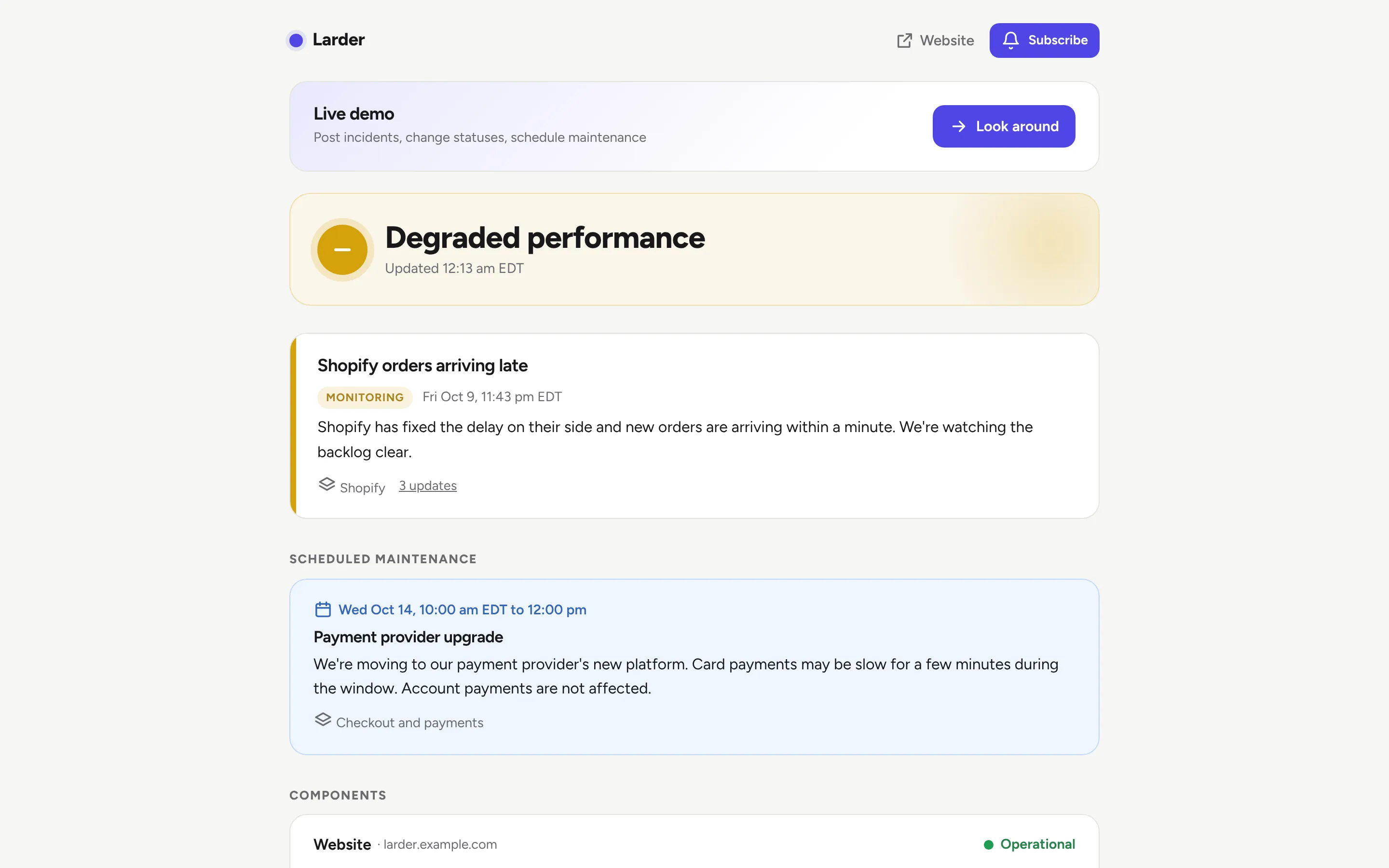
Status page
Instead of Atlassian Statuspage and Instatus
Tell customers what's working, what isn't and when it will be fixed.